

June 18, 2026
TYPE
ISUOG approved course
Date
September 3, 2026
Location
ExCel London, 1 Western Gateway, London E16 1XL, United Kingdom
Contact
support@gynaia.com
Contact person
Hilde Verduyckt
Using ultrasound to diagnose gynaecological cancer
What you need to know to run an effective rapid access clinic
Rather than focusing on research or advanced theory, this course focuses on the practical realities of implementing ultrasound-based diagnostics in routine clinical care, making it relevant for gynaecologists, sonographers, trainees, and anyone involved in diagnostic pathways.
Organized by the IOTA consortium, this course brings together clinicians who use and teach these diagnostic approaches every day, and spans ovarian mass assessment, PMB evaluation, cancer risk stratification, tumour spread assessment, and the practical implementation of effective diagnostic pathways, including rapid access clinics.
About the course
The full-day programme covers three core areas: starting off with a comprehensive review of ovarian pathology; from IOTA terminology and benign descriptors to the ADNEX model and its 2-step strategy, illustrated with case examples.
The day continues with endometrial pathology, including how to describe the endometrium using the IETA approach. A dedicated session on myometrial pathology follows, including adenomyosis, fibroids, and sarcoma red flags.
The programme wraps up with a forward-looking session on AI in clinical practice, including ADNEX AI, alongside practical lessons from the ROCKETS trial and guidance on common management dilemmas.
Additional sessions address ovarian masses in pregnancy, ovarian pathology in adolescents, assessment of tumour spread in suspected malignancy, and practical implementation lessons.
A lunch lecture by Gynaia explores how gynaecology-specific reporting tools and smart image analysis can reshape workflows in rapid access clinics.
Pricing
Includes on-site attendance to the full-day programme, catered lunch and breaks, and a 1-year Gynaia-IOTA Ovarian membership with learning materials, certification exam, webinars, education tools, and the ADNEX app.
Standard price: 295£ / 340€
Discount price: 195£ / 225€
Please choose this discounted rate if you:
-
have ever been IOTA certified
-
are a current Gynaia member (Ovarian/IOTA, Uterine/IOTA-IETA, Endometriosis/IDEA, or Early pregnancy)
-
work within the NHS (have an NHS e-mail address)
-
are an early career professional (e.g. student, resident, PhD researcher)
- GREEG members (France)
-
hail from low and lower-middle income countries (list)
Programme
View detailed programme
September 3, 2026
|
08:55 |
Welcome and introduction |
Dirk Timmerman, KU Leuven |
Current Management: evaluating women with a possible ovarian mass:
|
||
|
09:00 |
IOTA Terms and Definitions: making sure we all use the same nomenclature to describe ovarian masses including the 2026 update |
Agnieszka Kotlarz, Kraków University Medical College |
|
09:20 |
IOTA Benign Descriptors and pattern recognition for less common masses |
Ligita Jokubkiene, Malmö, Lund University |
|
09:40 |
The IOTA ADNEX model, the features you need to recognise to use it, test performance and the 2-step strategy |
Dirk Timmerman, KU Leuven
|
|
10:10 |
Case examples using IOTA ADNEX and the 2-step strategy to characterise ovarian pathology |
Antonia Testa and Francesca Moro, Gemelli Hospital, Rome
|
|
10:40 |
Coffee Break |
|
Ovarian pathology - specific scenarios
Chairs: Gàbor Szabo, Semmelweis University, Budapest and Ligita Jokubkiene, Malmö, Lund University
|
11:10 |
Managing ovarian masses in pregnancy including decidualisation |
Nina Cooper, Imperial College, London |
|
11:20 |
Classification and management of ovarian cysts in paediatric and adolescent population |
Maya Al Memar, Imperial College, London |
|
11:40 |
The features of less common ovarian cysts. Pattern recognition and the imaging in gynaecology series |
Antonia Testa, Gemelli Hospital, Rome |
|
12:00 |
Case examples of less common masses, cysts in pregnancy and in young women |
Francesca Moro, Gemelli Hospital, Rome and Nina Cooper, Imperial College London |
|
12:30 |
Lunch - Industry session with Gynaia - The future - How AI may impact on workflow in a rapid access cancer diagnostic clinic (Gynaia sponsored lecture) |
Dirk Timmerman, KU Leuven |
Evaluating women with possible endometrial pathology including PMBChairs: Inessa Safonova, University of Kharkiv and Antonia Testa, Gemelli Hospital Rome |
||
|
13:30 |
Measuring the endometrium, interpreting endometrial thickness and how to describe endometrial pathology using the IETA approach |
Thierry Van den Bosch, KU Leuven |
|
13:50 |
Investigating the endometrium in women taking HRT or Tamoxifen |
Juan Luis Alcazar, University of Navarra, Spain |
|
14:10 |
Using Saline or Gel to outline the endometrial cavity to diagnose focal pathology and when and how best to take an endometrial biopsy |
Thierry Van den Bosch, KU Leuven, Belgium |
|
14:30 |
Case examples of endometrial pathology |
Gàbor Szabo, Semmelweis University, Budapest |
|
15:00 |
Coffee Break |
|
|
Myometrial pathology and AIChairs: Thierry Van den Bosch, KU Leuven, Belgium and Valentina Chiappa, Istituto Nazionale dei Tumori Milan |
||
|
15:30 |
Defining myometrial pathology: adenomyosis, fibroids and sarcoma - when should you be concerned? |
Stefan Timmerman, Jessa Hospital, Hasselt, Belgium |
|
15:50 |
AI and classifying ovarian cysts - from Radiomics to ADNEX AI - when will these start to feature in your clinical practice? |
Jen Barcroft, Imperial College London |
Practical management of the clinic
|
||
|
16:10 |
Practical lessons learnt from the ROCKETS trial - implementing the use of the IOTA ADNEX model in your clinical practice |
Vivian Do, University of Birmingham |
|
16:30 |
What about looking for tumour spread – what can you report on in a patient when you identify a probable cancer in the rapid access clinic? |
Daniela Fischerová, Charles University, Prague |
|
17:00 |
Common management problems - What to do when a CA-125 is elevated by the scan is normal? When does a woman with PMB need to be investigated if she bleeds again? How long do you need to follow up ovarian cysts? |
Joseph Yazbek, Imperial College London |
|
17:30 |
Close of Meeting |
|
Invited Faculty
Dirk Timmerman
KU Leuven, Belgium

Misty Blanchette-Porter
University of Vermont
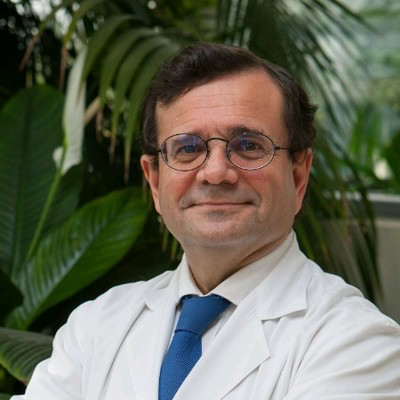
Juan Luis Alcazar
University of Navarra, Spain

Ligita Jokubkiene
Malmö, Lund University
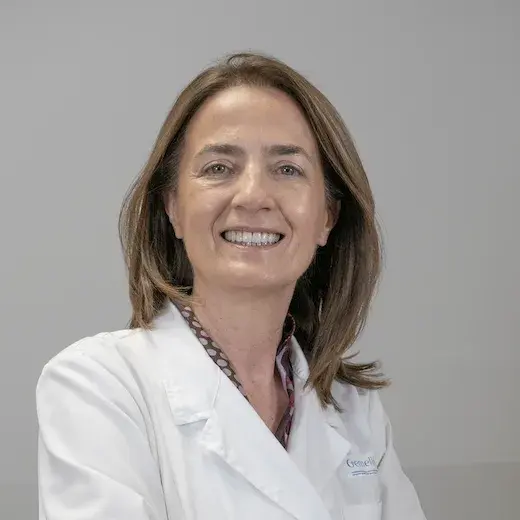
Antonia Testa
Gemelli Hospital, Rome

Gàbor Szabo
Semmelweis University, Budapest

Nina Cooper
Imperial College London
Francesca Moro
Gemelli Hospital, Rome

Thierry Van den Bosch
KU Leuven, Belgium
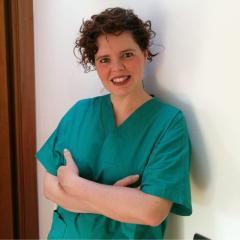
Valentina Chiappa
Istituto Nazionale dei Tumori Milan

Stefan Timmerman
Jessa Hospital, Hasselt, Belgium
Jen Barcroft
Imperial College London
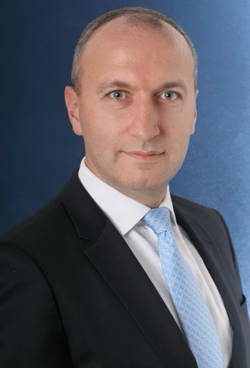
Joseph Yazbek
Imperial College London

Maya Al Memar
Imperial College London

Vivian Do
University of Birmingham

Inessa Safonova
University of Kharkiv
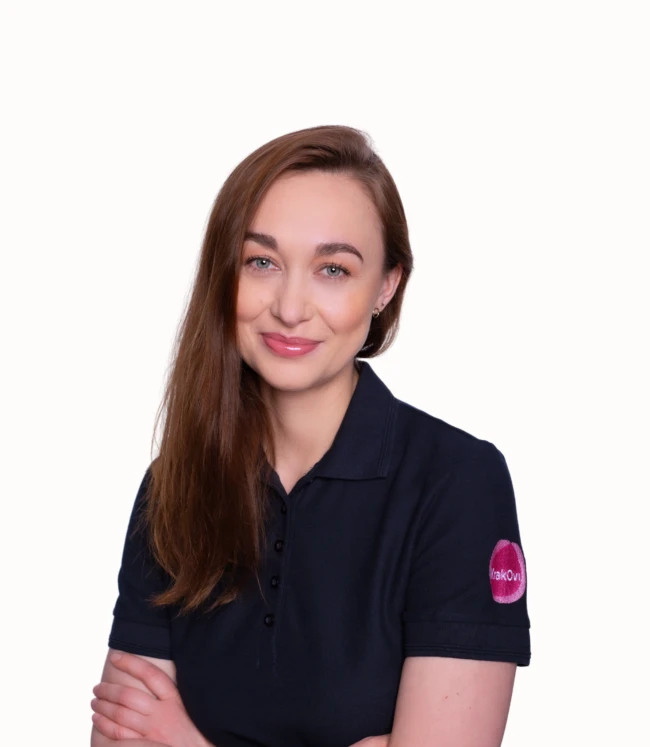
Agnieszka Kotlarz
Kraków University Medical College
Daniela Fischerová
Charles University, Prague, Czech Republic
Related content
September 3, 2026